
Architecture and Interior Design Integration in Ultra-Luxury Homes
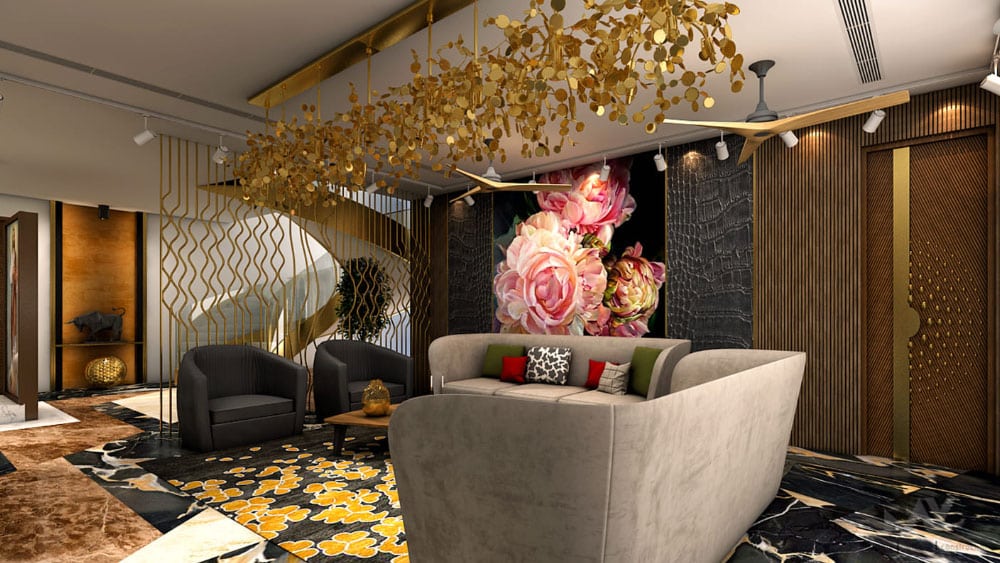
A home of genuine distinction is never assembled. It is orchestrated. The difference lies not in the quality of individual elements, but in the intelligence that binds them, the quiet conversation between a ceiling proportion and the light that enters it, between the grain of a stone floor and the geometry of the wall above. Architecture and interior design integration is not a technique applied at the end of a project. It is the founding principle from which every spatial decision flows.
In the ultra-luxury residential world, the fragmented model, where an architect designs the shell and an interior designer fills it, remains surprisingly common. The result is an invisible discord. Rooms that feel unresolved. Thresholds that interrupt rather than invite. Materials that contradict one another without reason. The house is complete in a technical sense, and yet something essential is absent. What is absent is coherence, and coherence, in the finest homes, is what separates living well from simply living comfortably.
This is the question RAY Artchitects was founded to answer.
What Does True Integration Mean in Luxury Homes
Integration is a word that risks becoming vague through overuse. In the context of integrated home design at this level, it means something precise: that every formal, material, and experiential decision in a residence descends from a single source of intention.
It means the thickness of a door frame is considered in relation to the depth of a window reveal. That the warmth of a timber ceiling is answered by the earthen undertone of upholstery chosen months later. That structural columns are not obstacles to be disguised but elements whose rhythm informs the placement of furniture, art, and light. Form, function, material, and lived experience are not four separate conversations. They are one.
This kind of architectural-interior unity does not happen through coordination alone. Coordination assumes two separate parties making separate decisions and then checking for conflict. Integration assumes one unified intelligence making decisions that never needed to be reconciled, because they were conceived together from the very beginning.
"True luxury is not the sum of beautiful parts. It is the coherence of a single, sustained idea, expressed across every surface, proportion, and threshold of a home."
Why Fragmented Design Fails in High-End Residences
The consequences of separated architecture and interiors are rarely dramatic. They manifest as a persistent, unnamed unease. A corridor that feels slightly too narrow because the flooring material was not part of the original spatial calculation. A living room where the ceiling height is generous but the space feels dense because the furniture scale was never communicated during the structural phase. A bedroom where natural light floods the floor but misses the wall where art was intended to hang.
In residences of this calibre, every proportion matters. A few centimetres in ceiling height, an unplanned change in floor level, a structural beam that arrived too late to be incorporated into a design idea, these are not minor inconveniences. They are the difference between a home that possesses quiet authority and one that simply costs a great deal of money.
Beyond aesthetics, fragmented design creates functional compromise. Kitchen layouts that conflict with the architect's service entries. Bathroom proportions that cannot accommodate the specified stone because the slab dimensions were never communicated during the waterproofing phase. A double-height living volume that was designed without knowledge of where the art would be placed, rendering the wall both architecturally grand and practically unusable.
In luxury home planning India, these disconnects are further amplified by the complexity of layering modern spatial sensibilities with climate-responsive architecture, local material traditions, and the deeply personal narratives of multi-generational families. The stakes are higher, and the margin for design conflict is lower.
The Philosophy of Unified Spatial Narrative
At RAY Artchitects, the premise is not that architecture and interiors should be coordinated. It is that they should be inseparable. Each space in a home is not a room. It is a chapter. And like any well-composed narrative, it must contribute to the larger story being told, while possessing its own distinct character.
A study should feel like retreat and clarity. A dining room should hold the particular weight of gathered evenings. A master suite should carry a sense of deep stillness that begins at the threshold, not at the bed. These are not interior design outcomes achieved through decoration. They are spatial outcomes achieved through the integration of architecture, material, scale, and light, working as one.
The philosophy holds that spaces should flow, not compete. Where two rooms meet, the transition should feel inevitable. Where a staircase rises through a home, the quality of light should shift in a way that was intended, not accidental. Where a terrace opens to landscape, the stone beneath the foot should echo the stone within the wall, so that the home and its setting become one continuous experience.
This is seamless interior architecture in its truest expression: not surfaces that match, but ideas that continue.
Key Elements of Architecture and Interior Design Integration
Material Continuity
Materials carry memory. In an integrated home, stone, timber, metal, and textile are not selected independently for each room. They are part of a material palette established at the architectural concept stage, one that considers the origin and character of each element and traces how it will move through the home. The limestone of an entrance forecourt might appear again, refined and honed, in the ground floor interiors, before giving way to a warmer travertine in the private zones above. The shift is intentional and felt, not arbitrary.
Material continuity does not mean sameness. It means coherence. A home can move from rough to refined, from cool to warm, from natural to crafted, as long as these transitions are orchestrated rather than accidental.
Light and Spatial Flow
Light is not something applied to architecture. It is something architecture creates. The placement of every aperture, every clerestory, every internal courtyard is a decision about how a space will be inhabited at six in the morning and at six in the evening, in January and in June. When interiors are designed alongside architecture, the furniture, the reflective quality of surfaces, and the depth of window reveals are all calibrated to work with the light rather than against it.
In bespoke villa design, this means understanding how a family moves through a home during a day. Where they gather in the morning, where they retreat in the afternoon, where they entertain in the evening. Architecture and interior design integration allows light to follow that movement, creating an experience that feels natural and deeply considered.
Structural Harmony
Structure, in most residential projects, is something to be hidden. In integrated design, it is something to be resolved. A column that appears in the wrong location, a beam that interrupts a view line, a slab edge that dictates an interior layout without having been informed by it: these are signs that architecture and interiors were conceived independently. In a unified process, the structural engineer, the architect, and the interior designer work within a shared spatial model. Decisions made at the structural stage are made with full knowledge of the interior intentions, and vice versa.
Furniture as Architecture
In luxury residential architecture India, the finest homes treat furniture not as objects placed within a space but as extensions of the architecture itself. Built elements, joinery pieces, and freestanding furniture are considered together because they collectively define how a room feels and functions. A custom sofa with a back height calibrated to a window sill. A dining table whose length is determined by the structural bay rhythm. A headboard whose material echoes a wall panel specified months earlier. These decisions require that the same mind that shaped the room has also considered what lives within it.
Luxury Home Planning in India: A Shift Toward Integration
The conversation around luxury home planning India has changed significantly over the past decade. A generation of clients who have experienced the finest residences across Europe, Southeast Asia, and the Americas returns with a different understanding of what a home can be. They are no longer satisfied with grandeur alone. They ask for coherence. For homes that feel as though they were always meant to be exactly as they are.
This shift is particularly visible in the villa and second home market. Families commissioning homes in Alibaug, the hills above Pune, the outskirts of Hyderabad, or the emerging residential corridors of Bangalore increasingly want a unified design process. They understand that the architecture and the interiors of a home are not two investments. They are one.
There is also the dimension of legacy. Homes at this level are not purchased or replaced. They are inherited. The families who commission them are building something that must feel relevant and resonant across generations. That kind of endurance requires design that is grounded in principle, not in moment. Architecture and interior design integration, when executed with care, creates homes that do not age. They deepen.
Villa Architectural Interiors: Designing From the Inside Out
Villa architectural interiors present a particular opportunity. A villa, unlike an apartment or a row house, exists within a landscape. It has multiple facades, multiple orientations, and a direct relationship with the outdoors. This makes the inside-out approach not just desirable but necessary.
What this means in practice: the interior life of a home, how a family wakes, works, gathers, and rests, informs the architecture rather than adapting to it. If a family begins every morning on a south-facing terrace, the master suite, its layout, its openings, and its transition to that outdoor space should be shaped by that single, lived truth. If a home's primary social ritual is a weekly gathering of extended family, the proportions of the living and dining zone should be determined by how many people feel comfortable within it, and that number should be known before a single structural decision is made.
This is what villa architectural interiors, done well, represent: architecture that has listened to life before it began to speak.
The RAY Artchitects Approach
At RAY, architecture and interior design integration is not a service offering. It is the only way the practice knows how to work. From the first spatial concept through to the installation of the final element, a single design narrative is maintained. There are no handoffs between teams, no moments where the interior aesthetic must negotiate with an architectural decision already fixed in concrete.
The process begins with what might be called a spatial portrait of the client: the way they inhabit time and space, the quality of silence they seek, the degree of openness or enclosure that makes them feel settled. This portrait becomes the conceptual core from which every subsequent decision, structural, material, and experiential, is made.
Technology is woven through this process with a certain quietness. Building information modelling, integrated lighting simulation, and material visualisation tools are used not to impress but to resolve. They allow the team to see a home fully before it is built, to identify moments of tension and moments of beauty that would otherwise only emerge on site, and to make decisions at the right stage rather than the remedial one.
The result is a process where architecture and interiors are not designed in sequence but in conversation, and where that conversation has been happening since the very first line was drawn.
The Emotional Outcome of Integrated Design
It is difficult to articulate precisely what it feels like to live in a home where architecture and interior design integration has been achieved at the deepest level. Words like calm and coherence suggest themselves, and they are accurate, but they do not capture the full quality of the experience.
What residents of these homes describe most often is a sense of ease that they cannot immediately explain. They feel settled, almost immediately, in the way one only usually feels after years of living somewhere. There is nothing to negotiate. Nothing catches the eye and asks to be different. The home makes no demands. It simply holds.
There is also something that might be called spatial identity: the sense that a home reflects something true about the people who live within it, not through the accumulation of objects or the performance of taste, but through the fundamental decisions about proportion, material, and light that were made before anything was built. This is the difference between a home that expresses a life and a home that merely contains one.
Timelessness, too, is a quality of integrated design. Spaces designed from a unified principle do not date in the way that spaces assembled from contemporary trends inevitably do. They carry a logic that remains legible regardless of the moment, because that logic was never borrowed from the moment to begin with.
Conclusion
The finest homes are not the product of two disciplines brought into alignment. They are the product of one sustained vision, applied with complete rigour, from the structure that holds the sky to the surface that meets the hand. Architecture and interior design integration, practised as a philosophy rather than a process, is what transforms a residence into something that approaches the genuinely rare: a home that is entirely itself.
In the context of luxury residential architecture India, where the traditions of space-making are ancient and the aspirations of contemporary living are expansive, this integration carries particular meaning. It is an acknowledgement that building a home at this level is an act of authorship, not assembly. That the families who commission such homes deserve spaces with the depth and coherence of a considered work, not the competence of a coordinated one.
The homes that endure, the ones passed between generations with a sense of quiet pride, were always made this way. With intention that began at the beginning, and held.
FAQs
What does architecture and interior design integration actually mean in the context of a luxury home?
It means that the architectural decisions of a home, its structure, proportions, openings, and material language, and its interior decisions, its surfaces, furniture, lighting, and spatial experience, are conceived together as a single unified vision rather than as two separate disciplines that are later coordinated. In a truly integrated home, every element descends from the same design intention. Nothing is negotiated after the fact. The result is a residence where coherence is felt before it is noticed.
Why does fragmented design feel unsatisfying even in expensive homes?
Because the eye and the body register discord even when the mind cannot name it. When architecture and interiors are designed separately, the proportions of a room may work structurally but fail spatially. Materials may be individually beautiful but tonally in conflict. Furniture may be exquisite in isolation but wrong in scale for the volume it inhabits. The result is a home that is technically complete and yet never quite settled. Fragmented design produces interiors that feel assembled rather than authored.
How does material continuity contribute to the experience of a luxury villa?
Material continuity creates the sense that a home has been designed from a single intelligence rather than composed from many independent decisions. When the stone of an entrance forecourt reappears, refined and considered, in the interiors beyond, the home begins to feel like a coherent spatial narrative rather than a collection of rooms.
Is integrated design only relevant for very large homes?
The principles of integration apply at every scale, but their impact is most visible and most consequential in residences of significant size and investment. In a home where the structural decisions have long-term permanence and the interior ambitions are specific and personal, the cost of dissonance between architecture and interiors is high. At the ultra-luxury level, where clients are commissioning homes intended to last across generations, integration is not a refinement of the process. It is the foundation of it.
How does luxury home planning in India differ from global counterparts in its design demands?
Indian luxury residential clients bring a layered set of demands that are distinct in their depth and complexity. There is the expectation of climate-responsive architecture, homes that manage the particular quality of Indian light and heat with intelligence. There is the dimension of multi-generational living, where public and private zones must coexist with a spatial sophistication that is rarely required elsewhere. And there is increasingly a desire for contemporary homes that carry a genuine sense of place, drawing on local material traditions and spatial sensibilities without resorting to the familiar language of pastiche. These demands make the integrated approach not just desirable but necessary.